[WARNING: CONTAINS MAJOR SPOILERS]
There are three game mechanics in Alan Wake 2 that I got really excited about and I’ll use them as a means to discuss my thoughts on the game:
- Alan’s lamp
- Saga’s case board
- No-HUD footprint tracking
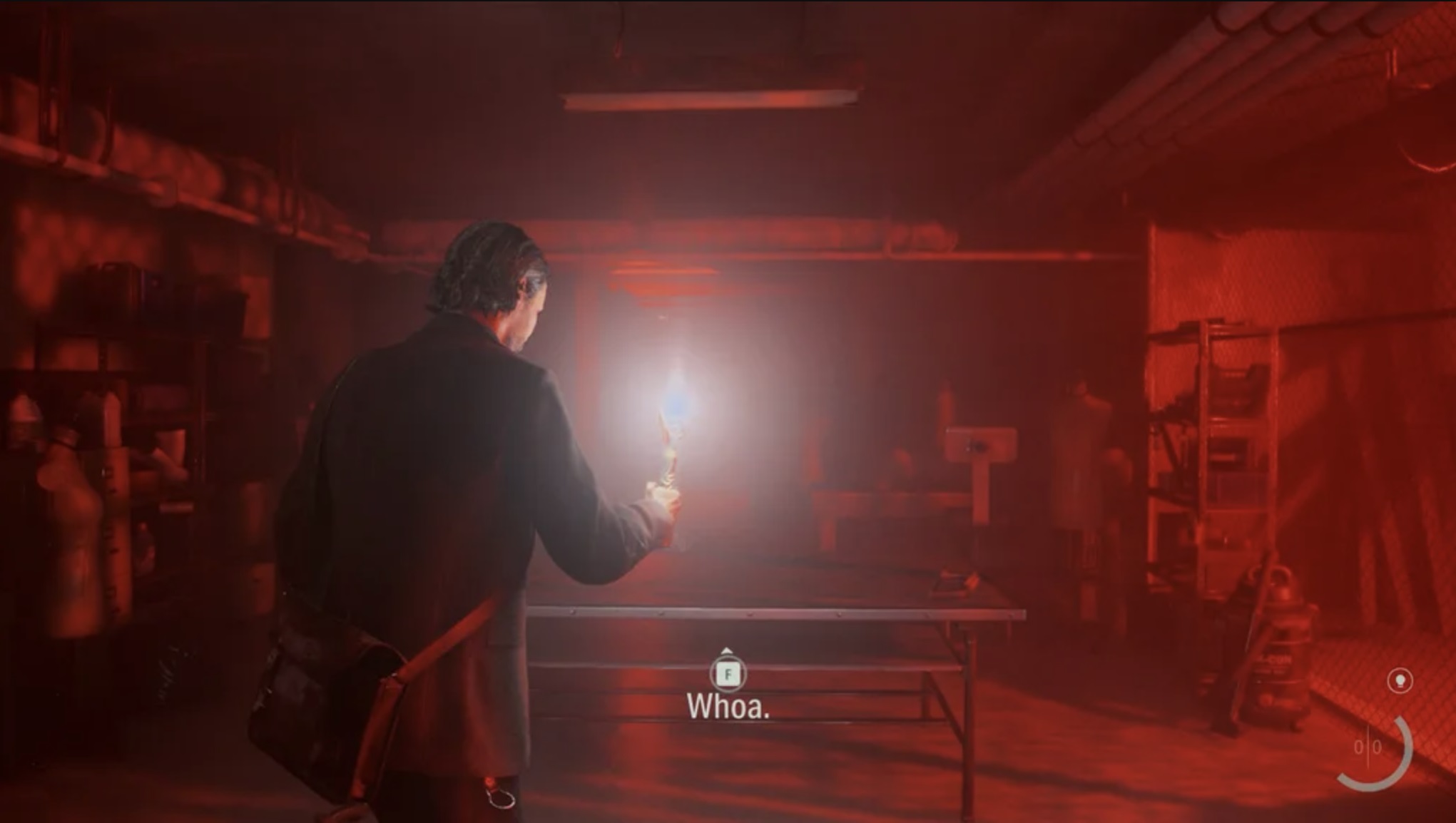
Alan’s lamp: this is a tool Alan receives in his side of the story that allows him to “steal” light from an in-world source (like a streetlamp) and lend it to another source that needs it (like ...an unpowered streetlamp.) Doing so will alter “reality” in the area around the lamp, revealing hidden doors or new paths. This allows for some really neat puzzles. It’s also just super impressive both visually AND technically - seeing the lighting and landscape change instantly with no load times whatsoever feels really fresh and it actually feels like a valid step towards justifying the excesses of modern AAA game tech. It also has the benefit of being on-point thematically: this is a game about light and dark, so a lamp that steals light fits like a glove. I liked this mechanic a lot. It DOES get buried a bit overall in a game absolutely filled with big-swing ideas and mechanics, but I felt they got good use out of it. This trick could easily have carried its own more modest game. To a lesser extent, I also enjoyed Alan’s “plot board” mechanic wherein he could rewrite a “scene” around him with a new idea - it worked similarly and felt a bit more guided, but it was still a fun idea and was a solid dual-protagonist mirror to Saga’s case-board.
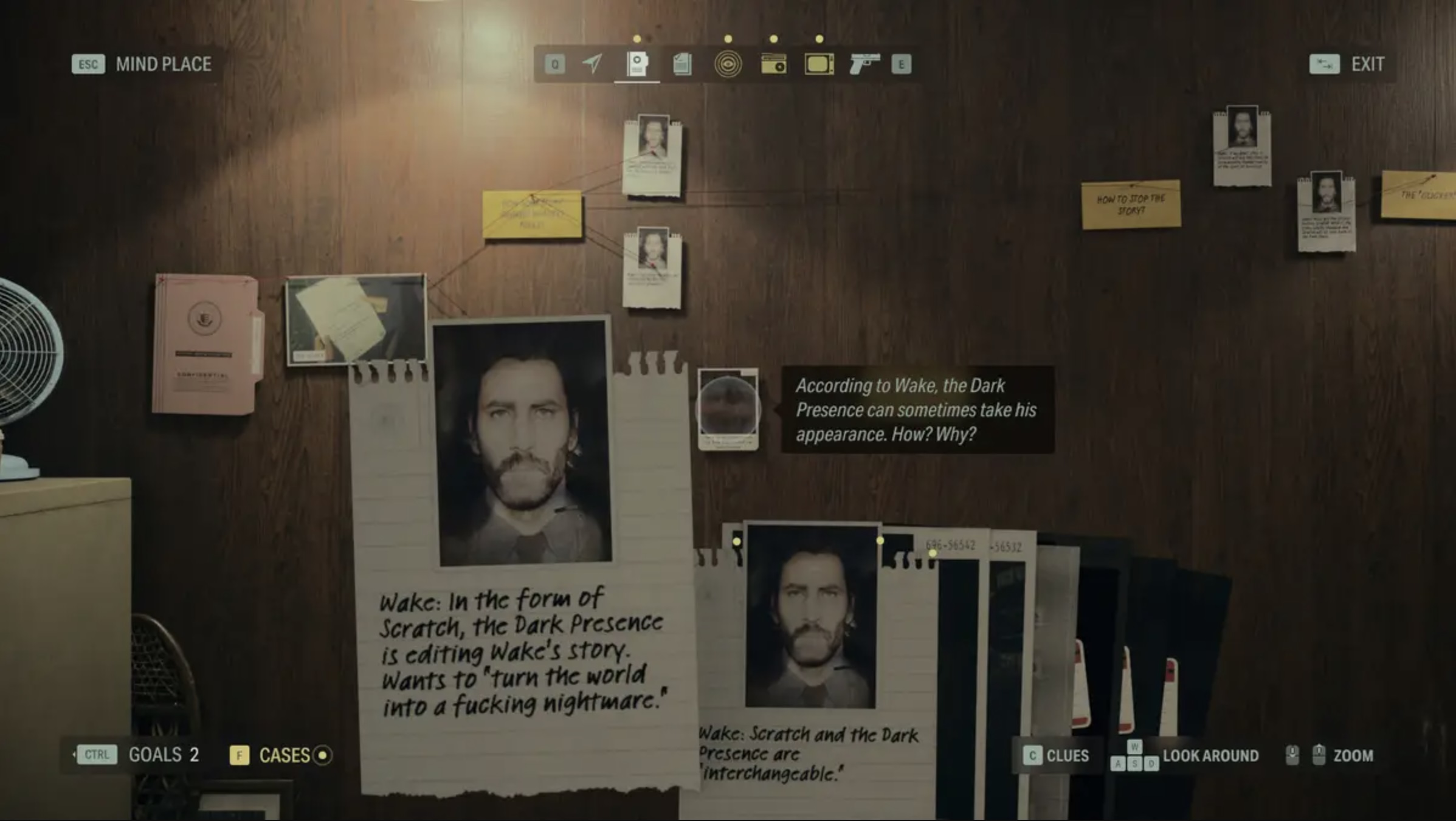
Saga’s case-board: okay, this one let me down big time. It had so much promise right off the bat: it’s a classic detective cork-board that you add clues to (in the form of polaroids) in order to organize and solve mysteries. When it was first introduced, I hoped it would be utilized in a way that lets you actually solve the many mysteries and murder cases of the game on your own… in practice, however, it’s basically just a perfunctory checklist that you tediously fill out as you go. The gameplay never amounts to more than trying to figure out which of 3-5 notecards a clue should be pinned next to, so if you don’t even want to think about it you can just mindlessly click on every available option until you get it right. At best, this is just a helpful reference sheet like the one in The Outer Wilds except you have to manually click and drag each entry into place. There’s a version of this case board that could have worked a bit more like the mechanics of Obra Dinn - the player could have been asked to make actual deductions and leaps of logic with clever “guess limitations” in place to keep them from just brute-forcing every option. Instead, we just get a glorified checklist. To make matters worse, it’s later revealed that Saga has supernatural abilities as a seer that allow her to essentially read the minds of prominent figures in each case, confirming that her (and by extension, our) own in-game deductions are being handed to us on a silver platter without any actual work being done. I had high hopes! That said, in the very final stretch of the game the case board IS used in a really wonderful way that illustrates Saga’s insecurities and fears, turning what was once a murder case checklist into an interactive deconstruction of the character’s psyche. The part where you’re asked to repeatedly add “evidence” that Saga’s daughter is dead to the board, despite it possibly not being true… that really worked for me. That one moment? Maybe the most genuinely interesting moment of the game.
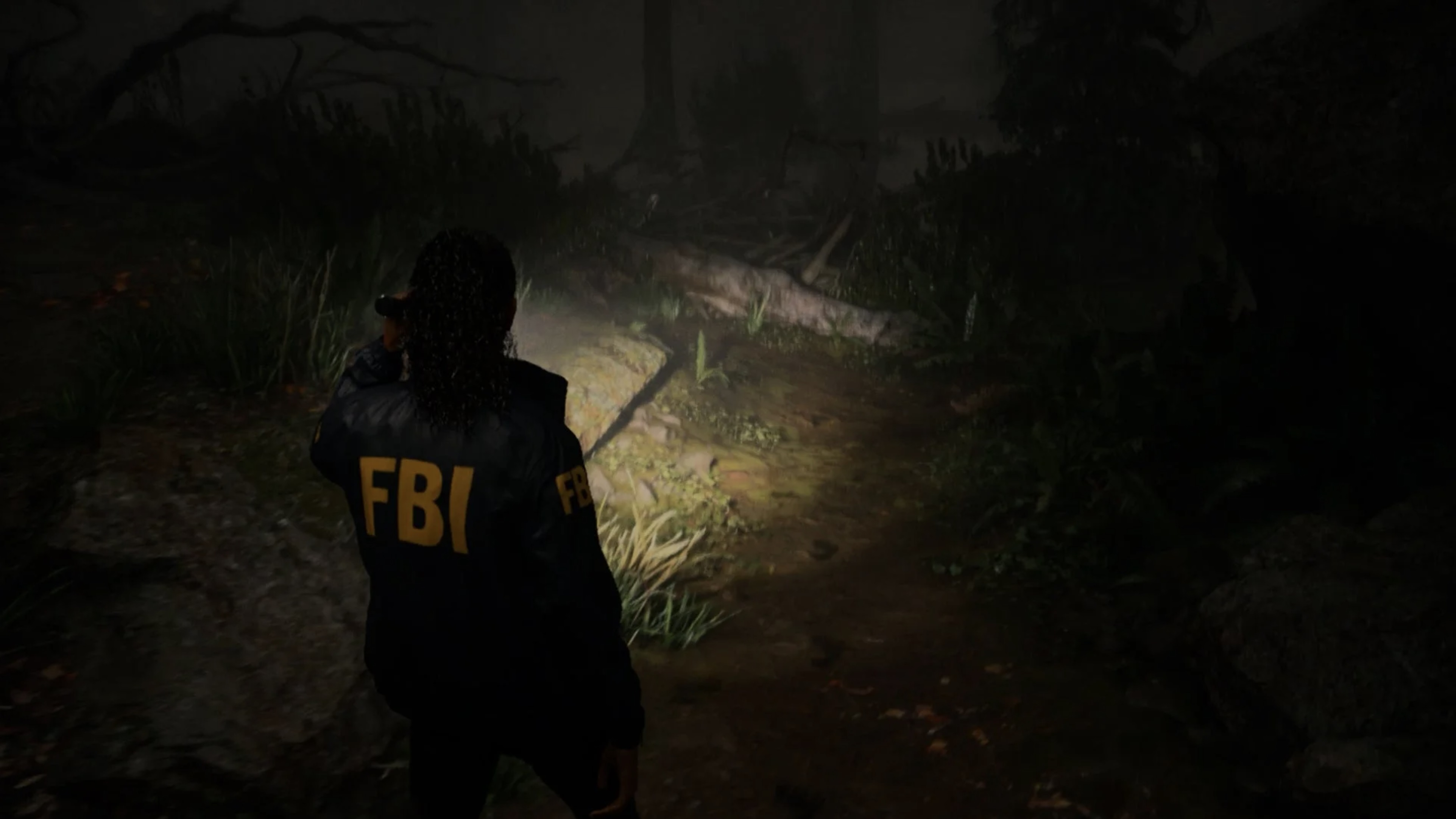
No-HUD footprint tracking: this one’s silly, I admit - I just liked that the game frequently asked you to track footprints on the ground without any help from the HUD at all. No Arkham Aslyum/Witcher 3 “detective mode” glowing smoke trails or highlighted objects to follow… just good, clean, honest-to-god “actual” footprints on the ground that are believably visible and can be followed just like they could in real life. We don’t need to “gamify” tracking footprints or busy up the process with icons and compasses - the concept translates 1:1 to a visually-realistic game like Alan Wake 2 and I’m so glad they understood that. Again, not the most groundbreaking or impressive mechanic… but it’s the restraint in the design here that I really appreciate.
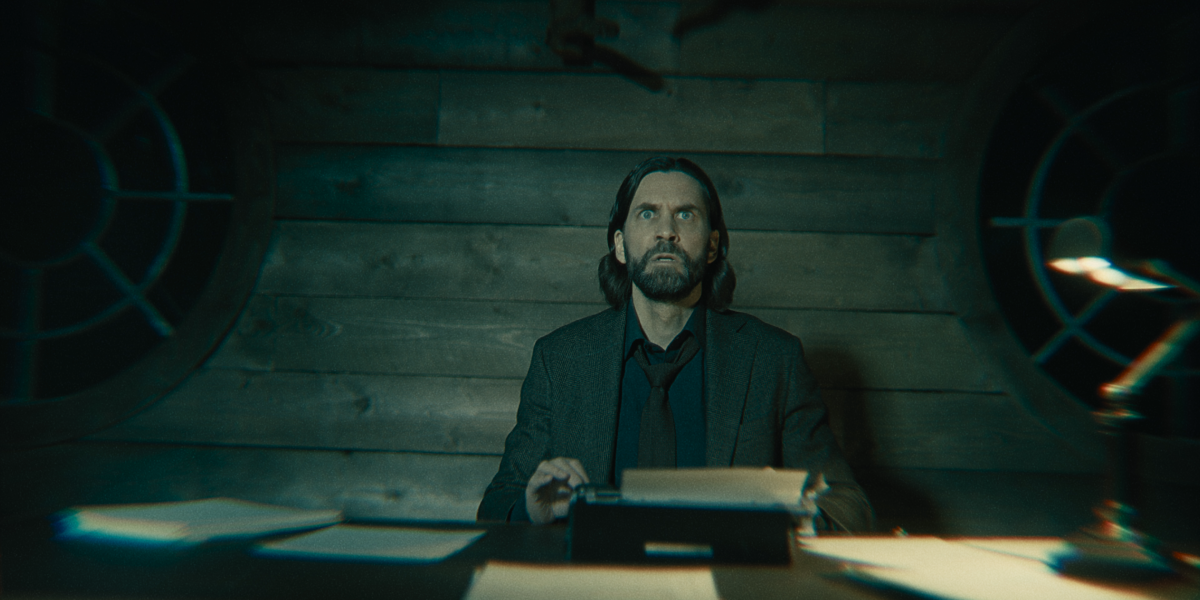
And lastly, I’d like to talk about the writing: I’ll be honest, I had to stop playing Alan Wake 1 after a few chapters. I could tell it was a bit tongue-in-cheek, but it wasn’t winky enough for my tastes - too much overwrought, proud-of-itself narration from Alan, too many hackneyed and ineffective horror tropes, and an endless onslaught of shameless, overly-slavish homages to Twin Peaks and Stephen King. The combat and puzzles were dated enough that there really wasn’t much appeal there for me, either. If I hadn’t played and enjoyed Control first, I probably wouldn’t have even bothered with Alan Wake 2 at all based on my time with the first. Luckily, a lot of what I liked about the writing in Control was present in Alan Wake 2, and mostly everything that turned me off from Alan Wake 1 had been tweaked and updated for the better.
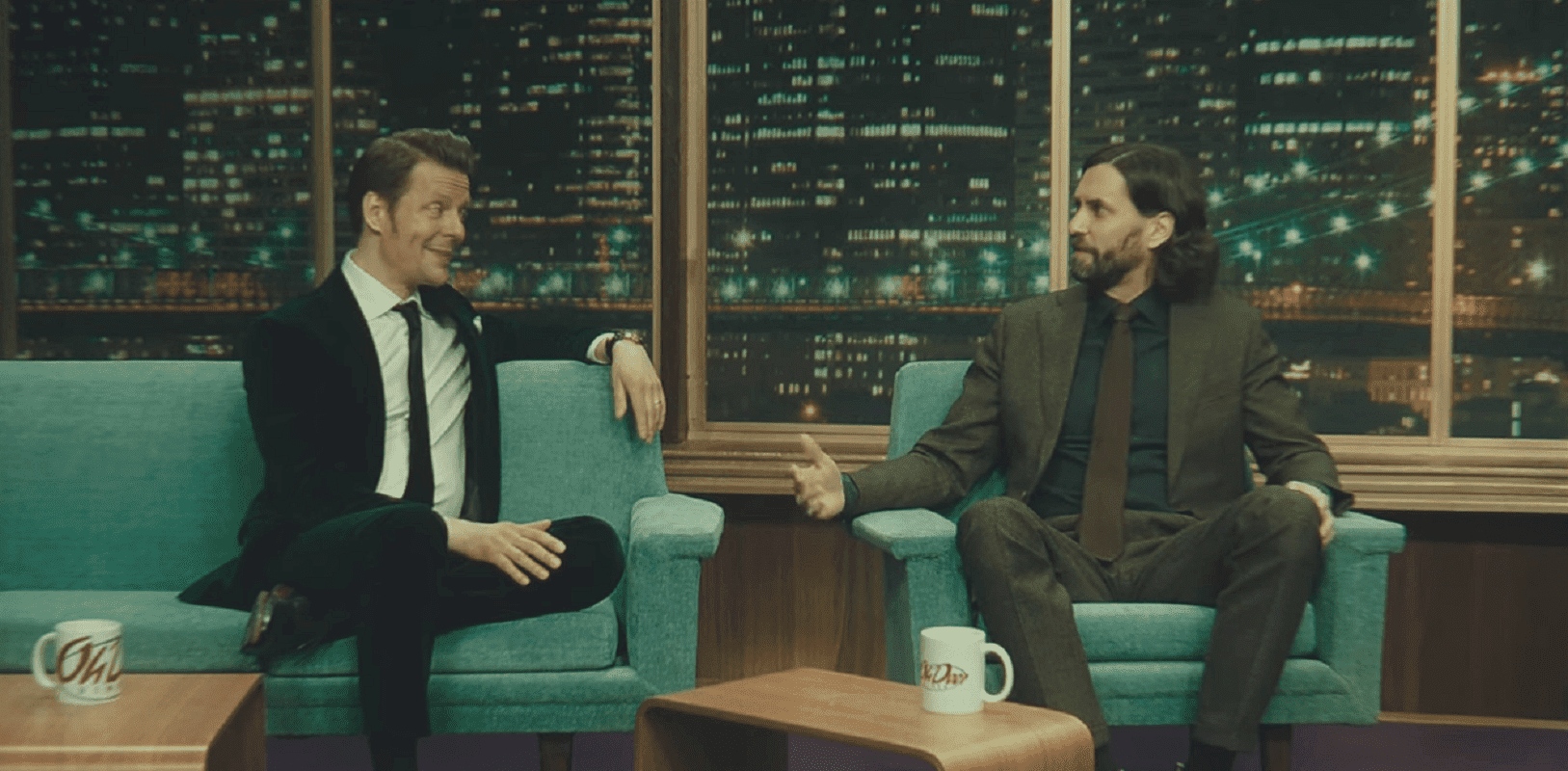
Most importantly, the tongue-in-cheek factor was better balanced here - I could tell they know how silly a lot of this is, how puffed-up Alan’s ego comes across, how fun it can be when you accept that pulpy genres like horror and crime don’t need to be high-brow works of art… immediately, I felt more amenable to everything. An expensive story-based game like this that doesn’t take itself as seriously as The Last Of Us, God Of War, Red Dead Redemption 2, or even the new Spider-Man is a breath of fresh air (even if it really wasn’t asking much). It doesn’t hurt that everything now gets to exist within the language of Control’s very appealing SCP-inspired paranormal lore, a newly-established context for the series that (in my opinion) does a lot of heavy lifting for the cornier aspects of the first game. The charming FMV sequences like the fake TV commercials, the talk show Alan appears on, or the lengthy in-universe Finnish art film all go a loooong way to show that Remedy is in on the joke (or at least willing to be.) I’m usually not going to care about a stuffy story about a suffering writer trying to save his marriage, but I’m much more open to it if he gets to hang out in a dream-world with his own crime-novel protagonist Max Payne stand-in, or if he gets to run around backstage in a TV studio while a rock band sings a heavy metal ballad about his previous adventures.
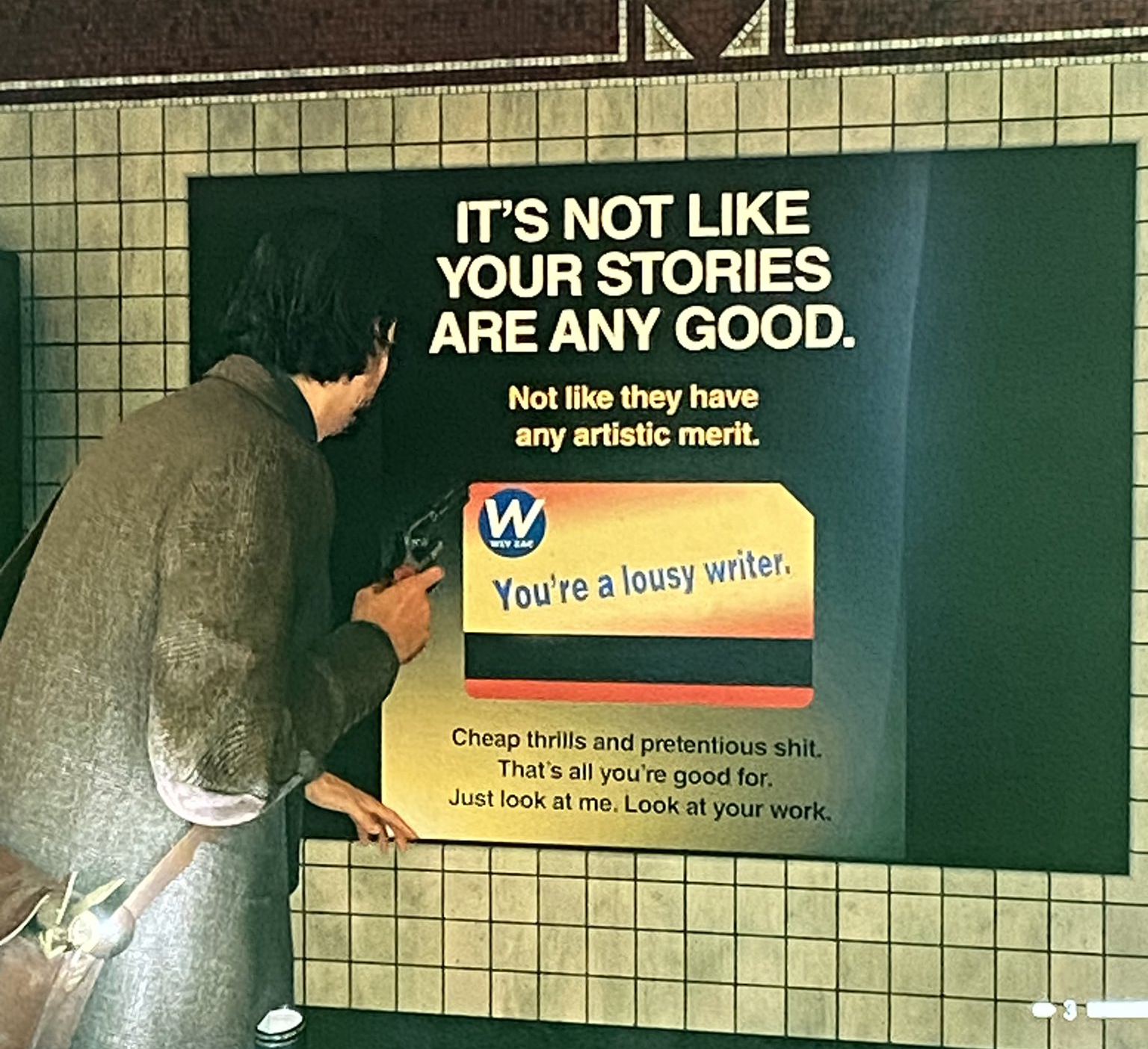
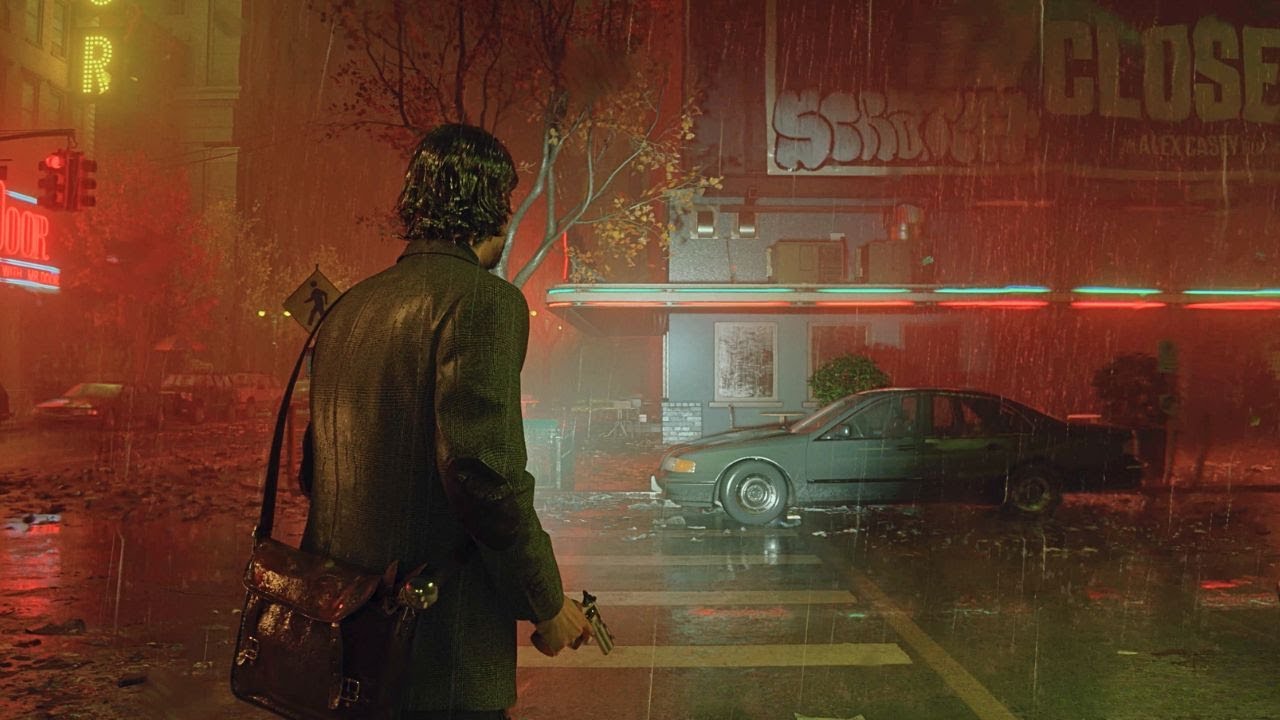
Once the meta-mockery is established, even the non-meta dialogue starts to feel like it gets a pass. This is a story about a schlocky horror writer whose works essentially come to life and terrorize a small town. It’s In The Mouth of Madness meets Twin Peaks (and, through Saga, meets True Detective.) When everything a character says might be the product of this supernatural book-to-life phenomenon, you can easily excuse all the tropey, corny lines because… what if it’s SUPPOSED to be corny? They’re winking at you! You can’t criticize it because it’s criticizing itself, maybe! It really did work for me and it opened everything up to be a lot more fun. This is a story about writing and about genre fiction, so yeah, lean into it! Let the detectives talk like they’re in a made-for-TV-knockoff of Silence of the Lambs. Let Alex Casey-as-Max Payne do his gritty edgelord monologue in a dark, neon-lit alley. Let Alan ramble endlessly about how he’s losing sanity - I’m sure Stephen King probably said some of Alan’s lines verbatim during a coke binge in the ‘70s.
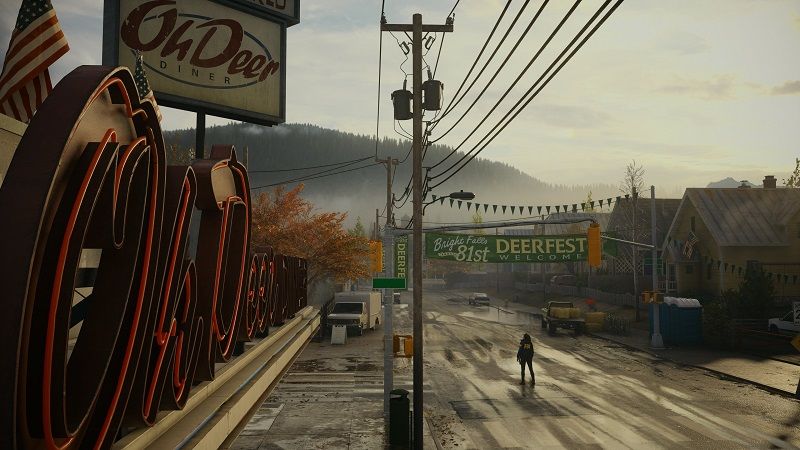
Overall, Alan Wake 2 hits on some interesting ideas but it’s nowhere near as thematically tight and interesting as Control’s story. Here we have some questions about ego, about fiction, even some interesting stuff about minority characters being carelessly exploited by white men. All of this, however, is kind of burdened a bit by having to tie back into 2 (or maybe 3?) other Remedy games (Control, Max Payne, and arguably Quantum Break) - while I enjoyed these ties to their other games more than I’d like to admit (especially the pseudo-Max Payne stuff) and as much as the Control lore elevates what didn’t work about Alan Wake 1, I ended up being more interested in the narrative as a pseudo-sequel to Control than as an Alan Wake story. Alan Wake 2 gains a bit from the Control ties, but it also loses some of its focus. It doesn’t help that the story is clearly very concerned with setting itself up for more sequels. I liked the ending enough and I’m fine with what was left open-ended, but an open-ended ending can feel a little more nefarious when you know it’s partly there because they want you to spend more money on them down the road. It’s a bit like if you watched Inception knowing there was an Inception 2 on the way that might open with the spinning top falling over.
This is a story (and game) that lives by its individual moments: the musical talk show sequence, the opening scene where you control a big wet naked fat man marked for death, the fake low-budget in-universe commercials, the enigmatic interdimensional janitor singing on-stage at a local bar, the musical lakeside climax (Remedy loves their musical numbers)... all great, all memorable, all fun. Far more interesting than the vast bulk of AAA games coming out these days, even if it doesn’t all come together in a truly meaningful way. If you’re going to spend this much money making a game, you might as well have some fun with it like Remedy does.